
Introduction
Technology has evolved from desktop computers to smartphones, smart wearables, and intelligent connected devices. The next major step in this evolution is spatial computing, a technology that allows digital content to exist and interact within the physical world. Instead of viewing information on a flat screen, users can experience digital objects as though they are part of their real environment. Powered by artificial intelligence, computer vision, sensors, augmented reality (AR), virtual reality (VR), and mixed reality (MR), spatial computing creates immersive experiences that blend the digital and physical worlds. As businesses and researchers continue investing in this technology, spatial computing is expected to transform industries ranging from healthcare and education to manufacturing, architecture, and entertainment.
What Is Spatial Computing?
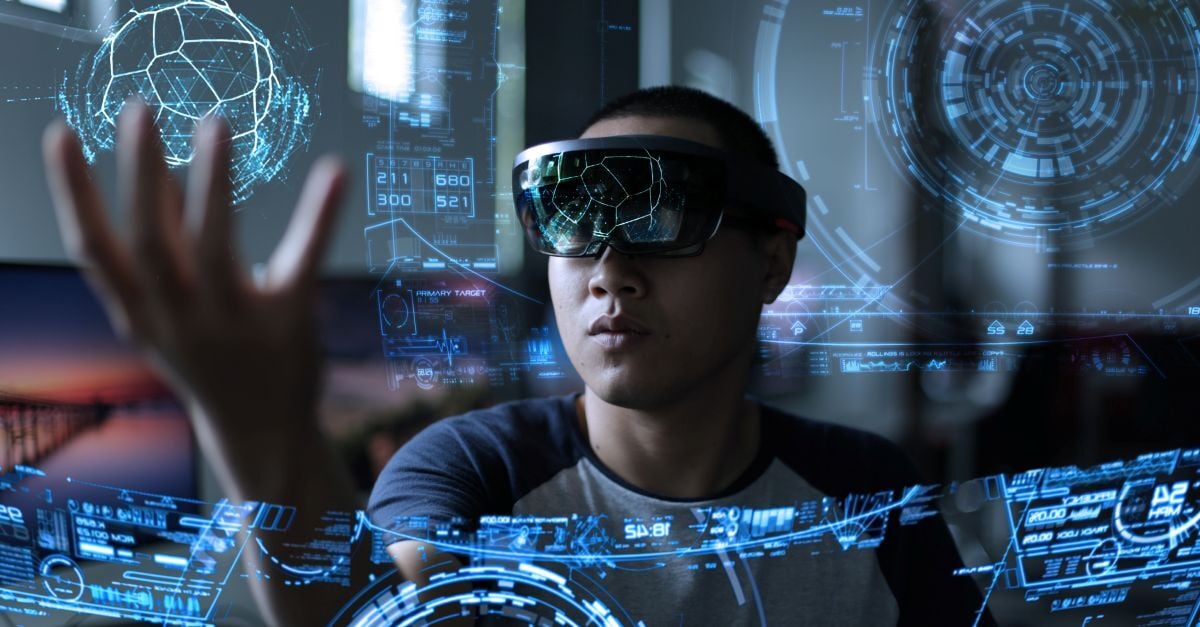
Spatial computing is a computing approach that enables computers to understand and interact with three-dimensional physical spaces. Using advanced sensors, cameras, depth detection, and artificial intelligence, devices can recognize objects, map environments, and respond intelligently to user movements. Unlike traditional computing, where users interact with keyboards, mice, or touchscreens, spatial computing allows interaction through gestures, voice commands, eye tracking, and body movements. This creates a more natural and intuitive experience where digital information appears to exist within the user’s surroundings rather than being limited to a display screen.
The Technology Behind Spatial Computing
Several advanced technologies work together to make spatial computing possible. Artificial intelligence analyzes environmental data and recognizes objects, while computer vision enables systems to interpret images and understand spatial relationships. Augmented reality overlays digital information onto the real world, while virtual reality creates fully immersive digital environments. Mixed reality combines both technologies, allowing digital objects to interact realistically with physical surroundings. Cloud computing processes large amounts of data, edge computing reduces response times, and high-speed wireless networks ensure smooth communication between connected devices. Together, these technologies create intelligent environments capable of understanding and responding to human actions in real time.
Applications in Healthcare
Healthcare is one of the industries expected to benefit significantly from spatial computing. Surgeons can use three-dimensional medical models to plan complex procedures before entering the operating room. Medical students can practice realistic simulations without requiring physical patients, improving education while reducing training risks. Doctors may also use augmented reality during procedures to visualize important anatomical structures directly within their field of view. Rehabilitation specialists are exploring immersive therapy environments that help patients recover movement and coordination through interactive exercises. These innovations have the potential to improve medical accuracy, patient safety, and healthcare education.
Transforming Education and Workplace Training
Spatial computing is changing how people learn by creating interactive educational experiences. Instead of reading about historical landmarks or scientific concepts in textbooks, students can explore realistic three-dimensional environments that make learning more engaging. Engineering students can examine complex machinery from every angle, while medical students can study detailed virtual anatomy models. Businesses are also using spatial computing for employee training by simulating workplace scenarios that would be expensive, dangerous, or difficult to recreate in real life. These immersive learning environments improve knowledge retention while allowing learners to practice skills safely and repeatedly.
Revolutionizing Manufacturing and Engineering
Manufacturing companies are adopting spatial computing to improve product design, quality control, and industrial maintenance. Engineers can create virtual prototypes, test product designs, and identify potential issues before manufacturing begins. Factory workers equipped with augmented reality headsets receive real-time instructions while assembling equipment or performing maintenance tasks. Digital overlays can display wiring diagrams, component specifications, and repair procedures directly on machinery, reducing errors and increasing S8BET. These capabilities help manufacturers shorten development cycles, reduce operational costs, and improve overall efficiency.
Smart Cities and Urban Planning
Urban planners are increasingly exploring spatial computing to design smarter and more sustainable cities. Three-dimensional digital models allow planners to simulate traffic flow, evaluate infrastructure projects, analyze environmental impact, and optimize public transportation systems before construction begins. Emergency response teams can use immersive simulations to prepare for natural disasters or public safety incidents. Architects and construction companies also benefit from visualizing buildings within their future surroundings, helping identify design improvements before projects move into the construction phase. This technology supports better planning while reducing costly mistakes.
Challenges and Future Development
Despite its enormous potential, spatial computing still faces several challenges. Developing advanced hardware capable of delivering realistic immersive experiences remains expensive, while processing large amounts of spatial data requires powerful computing resources. Privacy and cybersecurity also become increasingly important because spatial computing devices continuously collect information about users and their surroundings. Developers must establish strong data protection measures and transparent privacy practices to maintain user S8. As hardware becomes lighter, more affordable, and more energy efficient, spatial computing is expected to become increasingly accessible for businesses and consumers alike.
The Future of Spatial Computing
The future of spatial computing is closely connected with advances in artificial intelligence, robotics, wearable technology, and next-generation communication networks. Future workplaces may feature virtual collaboration spaces where employees interact naturally regardless of physical location. Retail businesses could offer immersive shopping experiences, while healthcare providers may conduct remote consultations using realistic three-dimensional environments. Smart homes, autonomous vehicles, and industrial automation systems may also integrate spatial computing to create more intuitive and intelligent user experiences. As technology continues evolving, digital and physical environments will become increasingly interconnected.
Conclusion
Spatial computing represents one of the most exciting developments in modern technology by transforming the way people interact with digital information. Through the combination of artificial intelligence, computer vision, augmented reality, virtual reality, and intelligent sensors, this technology creates immersive experiences that extend far beyond traditional screens. Its applications across healthcare, education, manufacturing, architecture, and urban planning demonstrate its enormous potential to reshape industries and improve everyday life. Although technical and privacy challenges remain, continuous innovation is making spatial computing more practical and widely available. In the years ahead, it is expected to become a cornerstone of the next generation of intelligent digital experiences, bringing humans and technology closer together than ever before.
