

Out in the field, severe weather enthusiasts watch X feeds the way pilots watch instruments. Posts move fast on a hot day, then disappear by morning.
A Twitter Downloader sits quietly in the workflow. Chasers reach for it when something on screen looks worth keeping for tomorrow’s review session.
A tornado wedge from a Kansas outbreak. A radar walkthrough a meteorologist posts between cells. These clips function as evidence after the storm passes.
A Quiet Archival Problem That Most Tools Skip
Chasers face a specific situation. The X timeline favors recency, and original posters often delete clips once a storm passes.
A live broadcast ends the moment the host taps stop. Without a deliberate save step, a season of field footage exists only in memory.
Researchers and weekend hobbyists at small weather networks have started building personal libraries for case studies and post-event review, not redistribution.
How sssTwitter Works as a Twitter Downloader in the Field
The tool runs in any browser, with no app install and no account required. That matters when you are on a hotspot in a rural county.
The workflow has three steps you can run from a phone in under a minute, even on weak rural signal.
- Copy the post URL from X on mobile or desktop.
- Paste it into the input field at sssTwitter.
- Pick the format you want and save the file to your device.
Format choice matters more than people expect at first. Saving a clip as MP4 keeps the visual record intact for later review.
Converting twitter to mp3 lets you strip a meteorologist’s audio briefing for transcript work. The same x downloader logic also covers GIFs of radar loops.
Some chasers also archive the post audio separately as backup. If the original post gets pulled, the saved x to mp3 file still preserves the meteorologist’s words for citation.
Where It Differs From Manual Screen Capture
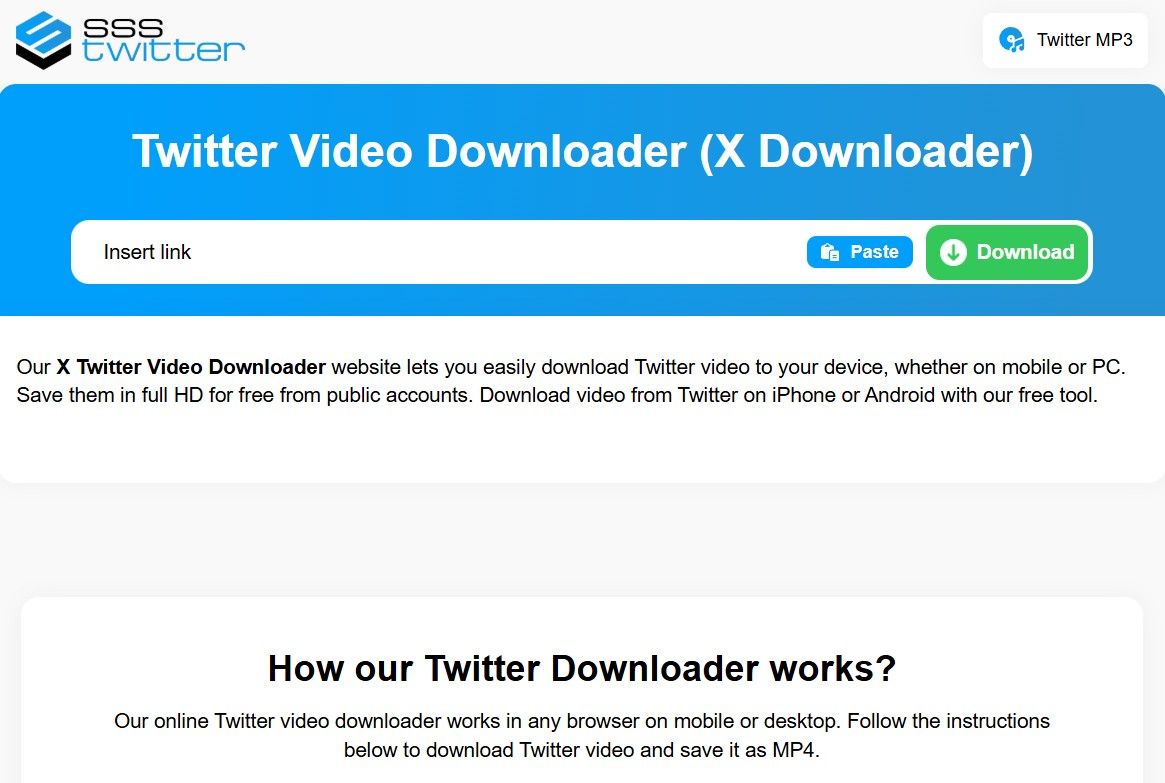
Field operators often default to phone screen recording when something dramatic appears in their feed. It works, but it trades quality for speed.
| Method | Output quality | Audio track | Captures ended broadcasts | Device storage cost |
| Phone screen recording | 720p or device-dependent | Mixed with system sound | Only while live | High during capture |
| sssTwitter | Source resolution, HD when available | Isolated, clean | Yes, while the post stays public | Low, direct save |
| Browser right-click save | Often blocked on X | Rarely available | No | Variable |
The table makes the gap obvious. Screen recording captures everything on the phone, including notifications and incoming texts during the same window.
An x video downloader skips that noise and pulls the source file when one is reachable. For broadcasts that already ended, recording was never an option.
A few storm chase forums have quietly migrated their preferred capture method toward this approach, especially for clips they expect to disappear within the hour.
What This Means for the Person Holding the Camera
For a chaser building a personal case file, the difference is reviewable footage versus a foggy memory three months after the event.
An HD copy from a twitter video downloader holds up under frame-by-frame review. A clean audio track preserves the sirens and the radio chatter that add useful context.
A free download twitter video hd option also serves amateur ornithologists and rural educators who pull X clips for classroom reference.
Live broadcast capture is the newest addition to the toolkit. Once a Space or live stream ends, X stops hosting the recording in many situations.
The new save path catches those before the window closes. That is the difference between citing a clip and describing it from memory.
Storm season runs long. Footage does not. A simple save habit, taken once per clip worth keeping, builds an archive that holds value for years.