
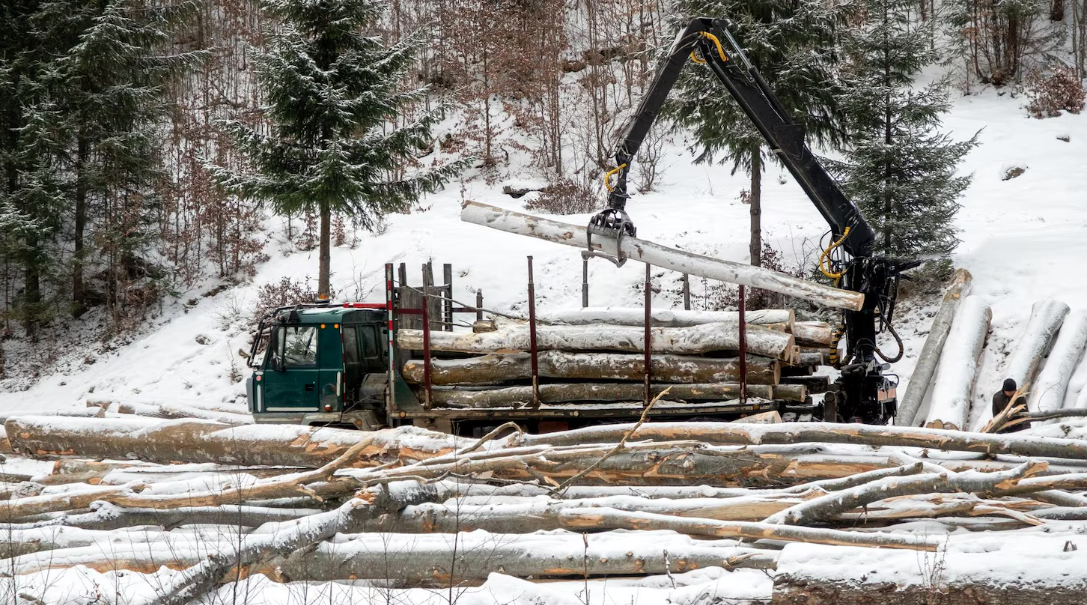
The working environment in the forestry business might vary from hour to hour. Crews may face difficulties due to uneven terrain, fallen trees, poor visibility, large loads, changing weather, and moving equipment. The equipment used for a project has a significant impact on how safely work can be done, even if training and proper planning are still crucial.
Rather than being modified from equipment used for general building, specialized forestry machines are built around the reality of wood harvesting. Their goal extends beyond increasing productivity. The proper equipment may improve control over heavy lumber, keep workers away from hazardous work areas, and facilitate a more orderly flow of activities around a site.
Preventing Employees From High-Risk Activities
The capacity of contemporary forestry technology to lessen direct human exposure to dangerous operations is one of its most significant accomplishments. In the past, personnel had to labor in close proximity to falling trees, unstable logs, or physically handled material throughout certain phases of the wood harvesting process.
Many of these tasks may be completed by purpose-built equipment in an enclosed working posture. For instance, a feller buncher allows the operator to stay within the cab while cutting and controlling trees mechanically. Harvesters may reduce the amount of physical labor needed around fallen wood by combining cutting, delimbing, and processing tasks.
A more comprehensive site safety approach may include this separation between humans and moving materials.
Increased Self-Control When Managing Wood
When raised, piled, dragged, or transported across uneven terrain, logs might act erratically due to their great weight. Operators have more control over these movements because of specialized grapples, loaders, forwarders, and other wood handling equipment.
Additionally, personnel may create more predictable work zones with the use of mechanical handling. Equipment may transport material via prearranged routes and specified loading sites, reducing the need for laborers stationed near individual logs.
Therefore, businesses looking for forestry equipment for sale should take factors other than engine power or output capacity into account. Equally significant factors may include visibility, machine stability, operator safety, control responsiveness, and appropriateness for the targeted terrain.
Improved Tools For Challenging Terrain
Smooth, groomed surfaces are seldom used for forestry. It may be necessary for machines to navigate tight access ways, loose soil, mud, slopes, and tree debris. Unnecessary dangers may be introduced by using equipment that is not appropriate for those settings.
Forestry machinery that is purpose-built often has characteristics that facilitate operation in difficult conditions. These might include specific tires, tracks, high ground clearance, safety features, or layouts meant to increase stability, depending on the machine.
It’s crucial to choose equipment based on the terrain. For mountainous or densely forested terrain, a machine that works well on relatively flat plantation land may not be the ideal option. Therefore, equipment choices should be influenced by site evaluation prior to the start of work.
Protection For Operators Within The Cab
Another area where specialized design may help create safer working conditions is the operator cab. Throughout the course of a workday, forestry workers may encounter risks from branches, debris, moving wood, and machine movement.
In addition to better visibility and ergonomic controls, modern cabs might have protective structures. Operators may also be able to view places that are hard to see directly with the use of cameras and monitoring devices.
Comfort also has a functional purpose. Operators often have to operate complicated apparatus for extended periods of time. A well-thought-out sitting arrangement, easily accessible controls, temperature control, and less vibration may all help prevent weariness, which is crucial while maintaining a high level of attention.
Organizing Forestry Sites More Effectively
Individual machines do not assess safety on their own. The way that equipment interacts across the whole workplace also has an impact.
Managers are able to create better organized processes when machines have well-defined functions. It’s possible for one piece of equipment to handle falling, another to carry wood, and yet another to handle loading. Reducing needless contact between personnel, vehicles, and moving logs may be facilitated by well-defined operating zones and travel routes.
Communication is still crucial. In situations when sight is impeded by trees, topography, dust, or weather, operators must be aware of the whereabouts of other equipment and employees.
Encouraging A Safer Forestry Approach
Not all forestry-related risks can be eliminated by specialized equipment. It has the potential to alter how employees deal with many of those risks.
Purpose-built equipment may play a significant role in safer forestry operations by mechanically regulating wood, removing people from hazardous jobs, enhancing performance on challenging terrain, and enabling more organized workflows. Forestry companies are better equipped to handle challenging tasks without seeing productivity and safety as conflicting objectives when they combine appropriate equipment with skilled personnel, careful site planning, routine maintenance, and open communication.