
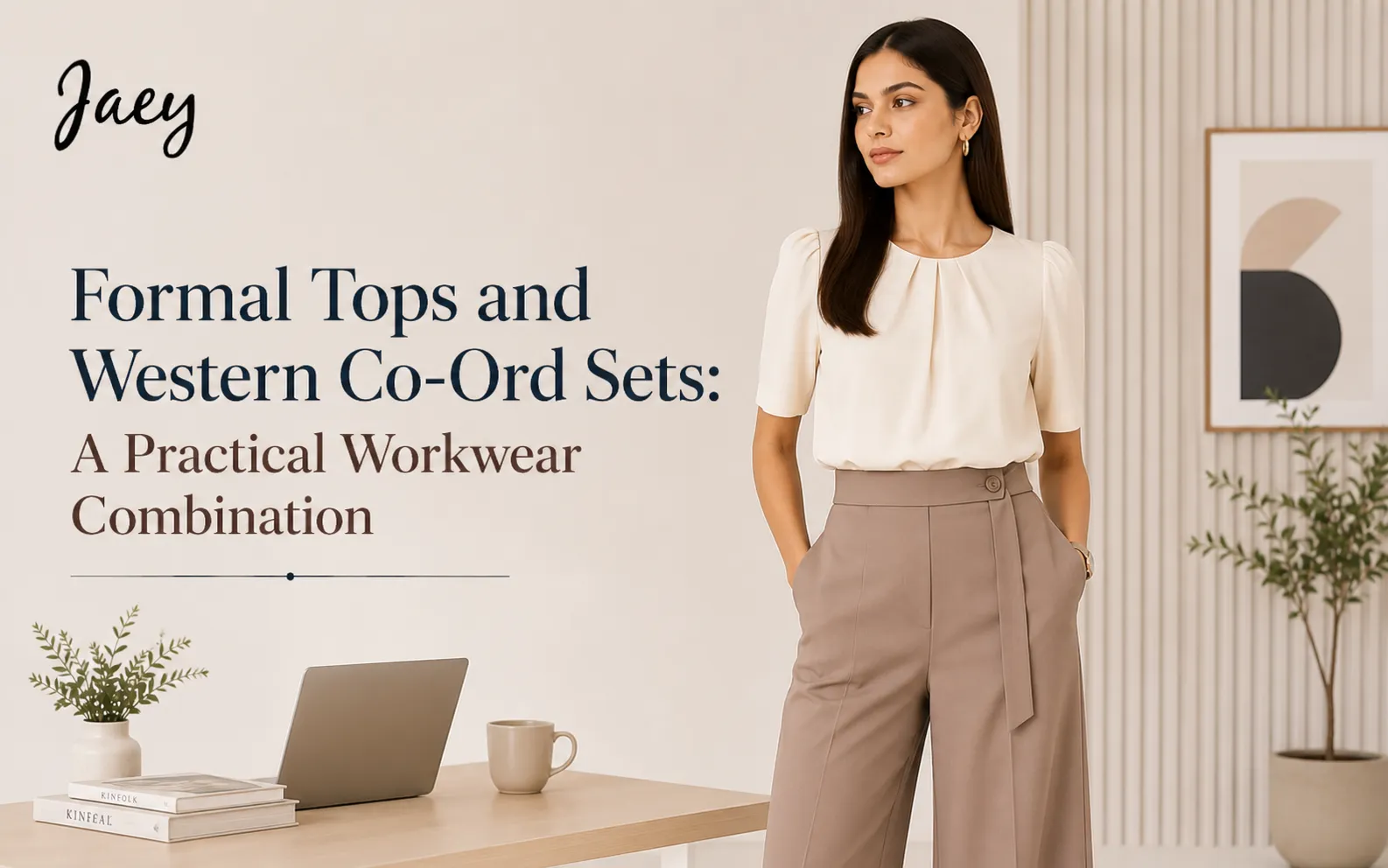
A practical work wardrobe needs a clear base. It should make dressing faster, allow repeat wear and still offer enough variety to feel personal. Formal tops and matching western sets can provide that base when they are selected as connected pieces rather than separate purchases.
The aim is not to create a uniform for every woman. It is to build a small group of garments that solve common work situations with less effort.
Begin with the tops you will actually repeat
Useful formal tops should work with more than one bottom. A clean shirt may suit straight trousers, a skirt and the bottom from a matching set. A softer tie-neck or draped top may work under a blazer and also stand alone.
Start with fit at the shoulder and bust. The neckline should stay secure. Buttons should lie flat. Sleeves should allow the arms to move forward without lifting the entire garment.
Consider length before deciding whether a top is versatile. A shirt meant for tucking needs enough fabric to stay inside the waistband. An untucked style needs a finished hem and a length that works with the trousers already owned.
Use co-ords as wardrobe building blocks
The value of co ord sets western clothing is not limited to the matching look. The top and bottom can support other outfits. This makes a good set useful even when the full combination is memorable.
Before buying, picture the top with two other bottoms. Then picture the trousers with two other tops. If both exercises feel easy, the set is likely to earn repeat wear.
Some sets are designed mainly as one statement outfit. That can still be a valid purchase for events, presentations or important meetings. It should simply be judged by a different standard than an everyday set.
Build around proportion
Proportion is the relationship between garment lengths, widths and points of emphasis. It is not a rule about making the body look smaller.
A cropped co-ord top may work with high-rise trousers because the waistlines meet. A long top may work better with a straighter bottom. A wide trouser can carry a fitted or defined top, while a fluid top may need a clearer shoulder or neckline.
Try the outfit without forcing a tuck or belt. Then test those styling options. The garment should provide a good starting shape before accessories are used to correct it.
Create a useful colour plan
Choose base colours that already exist in the wardrobe. Black, navy, brown, grey and cream are common, but any repeatable shade can become a neutral.
Add colour where it has the most use. A coloured formal top may refresh several dark bottoms. A tonal co-ord may provide a complete look and separate into softer combinations.
Check colour under daylight and indoor light. Some shades change strongly. Thin light fabric may also become transparent under direct light, which affects office use.
Select fabric for comfort and upkeep
Workwear must survive sitting, commuting and regular cleaning. Crepe blends often drape well and resist severe creasing. Cotton blends may feel breathable while holding more shape than soft cotton. Linen is comfortable but naturally creases.
No fibre is automatically suitable or unsuitable. Weave, thickness, lining and finish change how the fabric behaves. Read the care label and consider whether the required washing, drying and ironing fit the weekly routine.
Stretch can improve comfort, especially in trousers and shaped tops. It should support movement without causing the garment to cling or lose shape.
Make room for different work settings
A normal week may include formal meetings, quiet desk days and travel. The wardrobe should allow small adjustments.
A co-ord can be worn as a full set for a presentation. Its trousers can be paired with a simple top the next day. A formal top may be worn under a blazer for a meeting and without the blazer later.
Shoes also change the tone. Low heels or formal flats may sharpen the set. Loafers or clean minimal sneakers may suit a relaxed office. The dress code and the day’s movement should guide the choice.
Avoid overbuying near-duplicates
Two navy tops may look different on a hanger but perform the same role. Before buying, ask what new outfit the garment creates. If the answer is unclear, the wardrobe may not need it.
Quality should be checked against expected use. A frequently worn top needs strong seams and manageable care. A special co-ord may justify more delicate treatment if it serves a clear occasion.
Cost per wear is a better measure than price alone. A reasonably priced top worn fifty times may offer more value than a discounted set worn once.
Finish with a movement test
Wear the full outfit and sit down. Reach forward, raise the arms and walk. Check whether the top shifts, the trousers pull or the waistband becomes uncomfortable.
Look at the outfit from the side and back. Check whether hems remain level and side seams stay close to vertical. Small alterations can improve length and waist fit, but major shoulder or armhole problems usually call for another cut.
A practical work wardrobe is built through observation. Formal tops provide flexible upper layers. Western co-ords provide quick complete outfits and useful separates. Together, they can reduce daily decisions without reducing personal choice.