
Walk into a spa, yoga studio or wellness store and one of the first things you may notice isn’t something you see.
It’s something you smell.
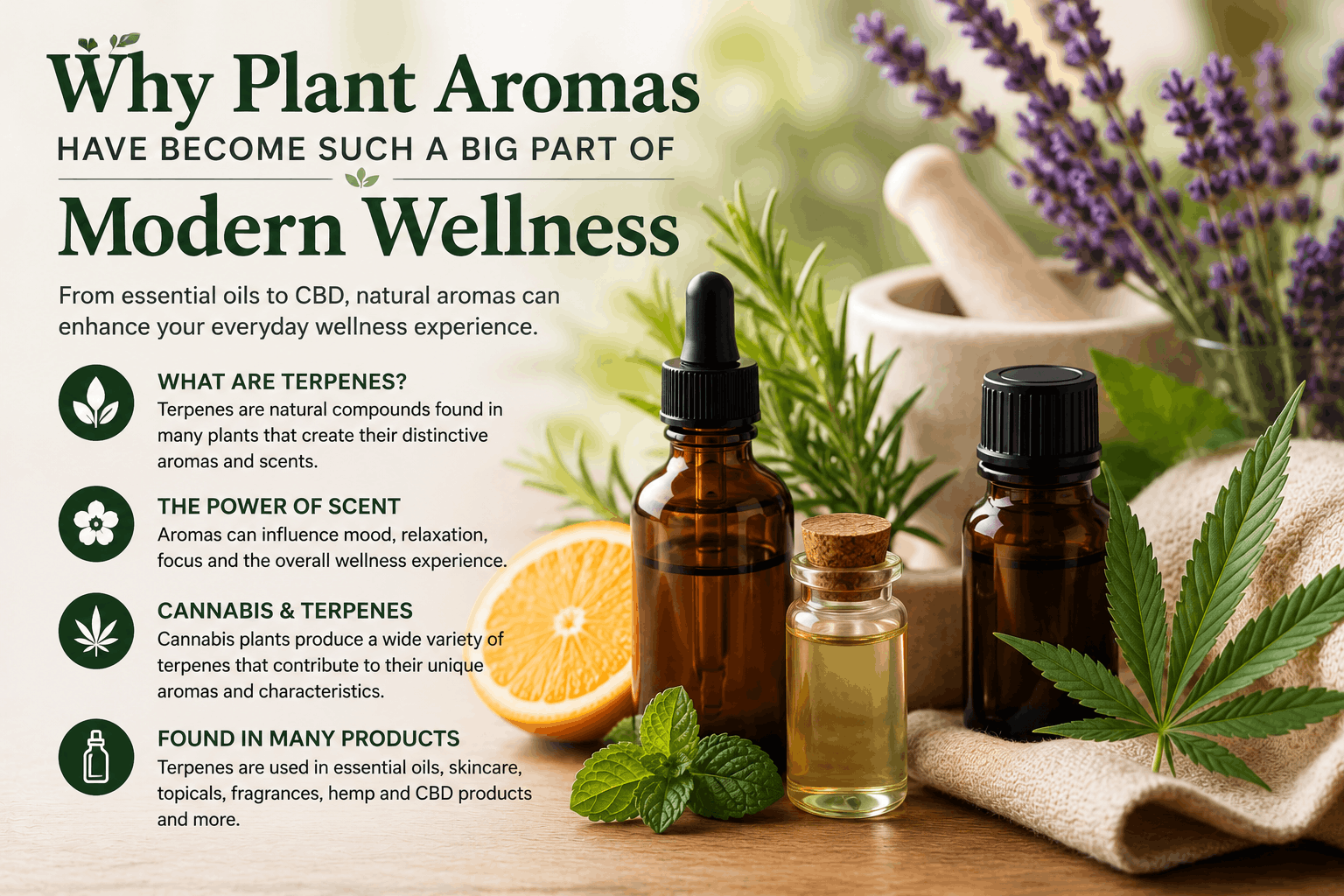
Lavender, citrus, eucalyptus, peppermint and other botanical aromas have become closely associated with relaxation, skincare, massage and everyday wellness routines.
But what actually gives plants their distinctive scents?
Much of the answer comes down to naturally occurring compounds called terpenes.
What Are Terpenes?
Terpenes are aromatic compounds produced naturally by many plants.
If you’ve ever peeled an orange, smelled fresh lavender or noticed the unmistakable aroma of pine trees, you’ve experienced terpenes.
Different terpenes contribute different aromas.
Limonene is strongly associated with the familiar citrus aroma found in the peels of lemons and oranges.
Pinene contributes to the characteristic scent of pine trees and is also found in numerous herbs.
Linalool is commonly associated with lavender’s floral aroma.
Menthol, meanwhile, is closely associated with the familiar cooling aroma and sensation of mint.
These compounds aren’t unique to one particular plant. They’re found throughout nature.
Why Scent Has Become Part of Wellness Culture
Modern wellness isn’t limited to exercise and nutrition.
People increasingly pay attention to the entire experience surrounding their routines.
That’s one reason essential oils, scented candles, botanical skincare products, bath products and aromatherapy have become so popular.
A relaxing evening routine might include dimmed lights, lavender-scented products and calming music.
Someone finishing a difficult workout might prefer the sharp, refreshing aroma of peppermint or eucalyptus.
Spas have understood this connection for decades.
The aroma of a product can dramatically change how someone perceives and experiences it, even before considering the product’s other ingredients.
Cannabis Has Its Own Complex Aroma
Cannabis and hemp plants also naturally produce terpenes.
In fact, terpenes are largely responsible for the wide variety of aromas associated with different cannabis varieties.
Some may smell citrusy.
Others can have earthy, pine-like, floral, fruity or herbal characteristics.
Consumers interested in understanding where these compounds come from can learn more about cannabis-derived terpenes and how they compare with terpenes obtained from other botanical sources.
It’s an interesting subject because many of the aromatic compounds associated with cannabis aren’t exclusive to cannabis at all.
The same or similar terpenes can occur naturally in herbs, fruits, flowers and other plants.
Cannabis-Derived vs. Botanical Terpenes
One distinction consumers sometimes encounter is between cannabis-derived terpenes and botanically derived terpenes.
Cannabis-derived terpenes are extracted from cannabis or hemp plant material.
Botanically derived terpenes are obtained from other plant sources.
For example, limonene can be sourced from citrus fruits, while pinene can come from pine and other botanical sources.
This distinction can matter to manufacturers and consumers who are interested in the origin of the ingredients used in a particular formulation.
It can also influence the complexity of an aroma.
Rather than thinking of “terpenes” as one ingredient, it’s better to think of them as an enormous family of naturally occurring aromatic compounds.
Terpenes Are Showing Up in More Products
As consumers become more interested in botanical ingredients, terpenes have started appearing in conversations surrounding a wide variety of products.
They can be found or discussed in connection with:
Essential oils
Skincare products
Massage oils
Bath products
Fragrances
Hemp products
CBD products
Candles and home fragrances
Botanical wellness products
This doesn’t necessarily mean terpenes are responsible for all of the effects associated with these products.
In many cases, their most obvious contribution is simply aroma.
But aroma itself can be an important part of the experience.
Why CBD Topicals Often Have Distinctive Scents
CBD creams, salves and balms provide a good example.
Two topical CBD products can contain similar amounts of CBD yet smell and feel completely different.
One might be virtually unscented.
Another might contain menthol and produce a powerful cooling sensation and minty aroma.
Another could include botanical extracts or essential oils that create an entirely different experience.
This is why looking at the complete ingredient list matters when comparing topical wellness products.
CBD concentration is only one part of the formulation.
Natural Doesn’t Automatically Mean Better
The increasing popularity of botanical ingredients has also created some misconceptions.
The word “natural” doesn’t automatically mean an ingredient is appropriate for everyone.
Essential oils, fragrances and concentrated botanical compounds can cause irritation or sensitivity in some individuals.
People with sensitive skin should pay particular attention to ingredient lists when trying new topical products.
Patch testing a small area before applying a new product more broadly can also be a sensible precaution.
Understanding What’s Behind the Aroma
The next time you peel an orange, walk through a pine forest or open a bottle of lavender essential oil, consider what’s creating that recognizable scent.
Terpenes are all around us.
They’re part of the complex chemistry plants use to create their distinctive aromas, and they’re increasingly becoming part of conversations surrounding fragrance, skincare, cannabis, CBD and modern wellness.
Understanding these compounds provides another example of how much chemistry is hidden inside the plants we encounter every day.
Sometimes something as simple as a familiar scent has a surprisingly interesting story behind it.